
Pakistan today finds itself very much at the centre of the world's headlines, unfortunately though for almost entirely the wrong reasons. Just in the last few weeks alone we have witnessed an unprecedented level of turmoil in the country - the outrageous attacks on the police academy outside Lahore and on the Sri Lankan cricket team inside the city, the political theatrics of rule in Punjab, the Long March episode followed by the subsequent reappointment of the Chief Justice and the continued violation of sovereignty and killings via US drone attacks - indeed Pakistan as a nation is in grave turmoil.
Militarily the country is at war in the tribal areas. This is firstly due to the direct assaults by the US/NATO forces based in Afghanistan, which have manifested themselves in the form of missile strikes / drone attacks, cross border raids etc. Secondly, the US is utilising the Pakistan armed forces themselves to further this assault. Here the full brunt of the Pakistan military has been hurled at the tribal people in order to quell them but without decisive results. Over a thousand Pakistani soldiers have died fighting this American war against their own brethren. Further, after sustained assaults by Pakistani troops and heavy shelling by Pakistani tanks and artillery, many thousands of tribal civilians have perished and over 700,000 have been displaced. Probably topping the roll of shame is the Pakistan Air Force's (PAF) actions against its own people. Whilst the Gazan Muslims were being haplessly bombed by the Israeli air force in front of a horrified world stage earlier this year, the PAF have been busy doing the same against their own people, killing hundreds. The only difference being the complete media blackout in Pakistan, designed to hide from the public the rampant bloodshed being inflicted on the tribal people.
Moreover, the Pakistan government has gone out of its way in receiving and executing orders from the American leadership. Almost every week brings new high ranking American dignitaries to Pakistani soil with the latest set of instructions for their puppets in Islamabad to follow blindly and obediently; recently the US special envoy to Pakistan and Afghanistan Richard Holbrooke and the US Joint Chiefs of Staff Chairman Admiral Mike Mullen, visited Pakistan in early April.
The age old predicament of biting the hand that feeds has been astonishingly reversed by the treacherous Pakistani leadership, who are indeed busy feeding the hand that very much bites. Reported by The Times newspaper of the UK, almost four hundred trucks per day are transported by road from Karachi to the US forces in Afghanistan, carrying the very bullets and missiles that will be rained down back at Pakistan. This constitutes about seventy percent of the total supplies consumed by the US and NATO forces across the border. Then there is the access and use of military bases, intelligence, logistics etc. For example the recent front page revelation also by The Times that the US drones firing on the tribal areas have in fact been operating from Pakistani soil for quite some time.
Economically the country is in just as much mayhem. According to a survey of Pakistan by the United Nations' Economic and Social Commission for Asia and the Pacific (ESCAP), inflation in 2008 was about 13%, whereas inflation of food prices stood at almost 20%. Government subsidies of electricity and gas costs have now been removed under pressure from the IMF. After witnessing such rampant inflation and in addition the recent food, electricity, gas and petrol shortages, the country has been financially brought to its knees. Like a drug addict, the country is living from one shot of IMF loans to the next, whilst staring continuously at the same time in the face of imminent bankruptcy.
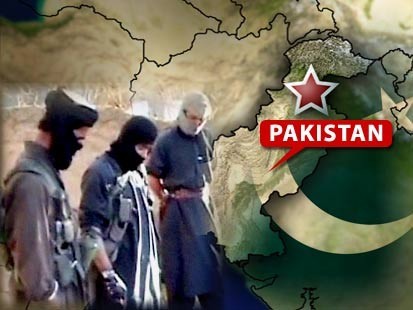
Coupled together, the above two predicaments have resulted in an extremely unstable political climate in Pakistan, to the extent that the country is now being labelled, from both internal and external sources, as a failed state which is incapable of enforcing its own writ and meeting the basic needs for its own people. Even more dangerous is the constant linkage of Pakistan to international terrorist attacks, resulting in the 'elevation' from this despicable status to an even lowlier one to that of a rogue state - i.e. one that poses a physical threat to countries neighbouring it and around the world.
Iraq, prior to its invasion and subsequent occupation, was politically painted in the exact same colours. It was linked to the 9/11 attacks in New York and further the West went about creating a political storm over the fact that Iraq was capable of launching WMD (Weapons of Mass Destruction) at the West within forty five minutes of so choosing. The fact that no such evidence was ever found in Iraq is largely irrelevant to the point here - Pakistan today is now clearly marked out to be the next black sheep in the flock and therefore needs to be culled. The British Foreign Secretary recently alleged that 9/11 was executed from the Pakistan tribal areas - the West's narrative has again been conveniently changed. This stance towards Pakistan now presents without doubt the gravest danger to the country since its birth over sixty years ago.
The real motives for placing Pakistan in the crosshairs of the Western, indeed American military nexus are however deeper and more complex than that which is being projected across the media in and outside Pakistan alike. Pakistan, and the surrounding areas, are of immense political, economic and military significance, and this is the real impetus behind why the United States today is busy ensnaring Pakistan in its tentacles.
First of all Pakistan, including Baluchistan and the NWFP, are rich in resources, which include huge gold, copper, coal, oil and gas reserves. This extends to countries immediately in the vicinity of Pakistan, such as Afghanistan and the Central Asian states that border it, which themselves have amongst other things massive oil and gas resources. America not only seeks the control of such resources, but also the supply route that will enable the extraction and delivery of these to the strategic deep sea port of Gwadar. Already most of the foreign military bases in southern Afghanistan line the route that the proposed pipeline from Turkmenistan will take on its way to Pakistan. Hence it will greatly benefit America to merge NWFP with Afghanistan and to 'liberate' Baluchistan into a free state upheld by a puppet government subservient to the US just as it has done so with Afghanistan.
Next we have the vital region of the Middle East and the enormous oil deposits present there. The US has successfully become the dominant player in the region displacing the British and French in the last 50 years, now having established a firm control directly (via military occupation) or indirectly (via client regimes) over the major oil fields in the area. Such control over the oil is vital to America's oil companies and similarly crucial to America's banking system since the oil is traded in America's currency of choosing - the US Dollar, which the US can print at will. If this oil were to fall out of their domain of control, then this commodity will cease to be traded in US Dollars, causing the collapse of the Dollar and hence the American financial system. According to a late 2000 Time magazine article, Saddam Hussein intended exactly such a step by reverting the trade of Iraq's oil from US Dollars to the rival currency of Euros instead and hence the reason why the US was so keen to invade and take over the country, thereby securing Iraq's oil and the medium of its transaction.
Similar to an earlier point, to ensure this status quo, America must not only control the source of the oil, i.e. the oil fields, but also the oil supply route which extracts the oil out of the region. This is fundamentally via oil tankers that snake through the Strait of Hormuz into the Gulf of Oman after emerging from the Persian Gulf. And it is this vital shipping lane that must be protected by the US at all costs and hence why such large deployments of America's Navy exist in the region (e.g. the US fifth fleet is based at Bahrain) and further explains why America is eager to ensure that no other major power can manoeuvre itself in the position to project its military might over this region.
The Afghan war against the Soviets in the eighties was backed and controlled by the US for this very purpose - to keep the Soviet Union out of this vital region. Today the US is equally concerned not to see China extend its political and military influence in the region via, amongst other things, Pakistan's port of Gwadar, which overlooks the Gulf of Oman, and in which China has invested heavily and has intentions of placing a military presence there. Hence we see America's eagerness to split Baluchistan from Pakistan, bringing the entire region under its direct influence.
Thirdly, and perhaps the most significant reason behind America's intense activity and interest in Pakistan, is the threat that Pakistan itself poses. This particular danger to America's interest emanates from within Pakistan and is certainly not of the terrorist nature which the Western media is busy hyping up. It rather stems from a genuine desire of the people in the country to revert to an Islamic ruling system which will rescue them from the failed concept of secularism, in which man made legislation, whether in the form of democracy or dictatorship, has only ensured the furthering of the vested interests of a few powerful families and select groups.
A very recent study conducted early this year on public opinion across key parts of the Muslim world by the University of Maryland in America further corroborates this. Surveys were conducted across countries such as Morocco, Egypt, Pakistan and Indonesia and results were found to be fairly consistent. In answer to the question whether Shariah law via an Islamic system should be applied strictly across one's country, more than three quarters of the people examined in Pakistan, Egypt and Morocco were in favour of such an initiative, whereas about half agreed in Indonesia.
This system, the Khilafah or Caliphate as it is also commonly known as, is indeed greatly feared in the West since it will spell the end of their domination of not just the region in and around Pakistan, but eventually the entire Muslim world, which has been divided into over sixty nationalist based states since the fall of the Uthmani Khilafah over eighty years ago. The US understands this clearly, and statements by its senior most leaders over the past few years, flavoured with appropriate propaganda for the consumption of Western populations, have confirmed this. For example some of the now famous quotations are: "They hope to establish a violent political utopia across the Middle East, which they call caliphate, where all would be ruled according to their hateful ideology" - George Bush, "Their ultimate aim, and one they boldly proclaim, is to establish a caliphate covering a region from Spain, across North Africa, through the Middle East and South Asia, all the way around to Indonesia. And it wouldn't stop there" - Dick Cheney and "They want to destabilise moderate mainstream Muslim regimes and establish a Caliphate, and have a handful of clerics determine what everyone in that country can do, and then spread that across the globe from Indonesia to the Middle East through North Africa and Southern Europe" - Donald Rumsfeld.
The US further recognises, possibly unfortunately more so than the Pakistani establishment itself, that Pakistan contains all the raw elements of becoming such a new technologically advanced and powerful Islamic entity; namely massive agricultural and mineral resources, a large, young and driven population with expertise in many fields, a powerful, nuclear armed military backed up with a innovative military industrial complex gaining further every day the capability to produce its own aircraft, tanks, submarines, missiles and warships together with an economically and politically strategic geographical location.
Therefore to maintain its control over the region, the US has produced the now infamous map of the Wider Middle East - drawn up in 2006 by the retired US army colonel Ralph Peters. In this map Pakistan, like several other countries including Iraq, has been fragmented and what remains of it are only the Punjab and Sindh provinces, if these have not already been surrendered over to India.
To facilitate this agenda, the US and the West have undertaken a whole series of nefarious activities related to Pakistan. The first stage has been the initiation of a psychological phase in which public opinion in Western countries is being turned against Pakistan and the case to 'deal' with it is stacking up on a daily basis. To help facilitate this and subsequent stages, the US has on the ground in Pakistan its special forces, intelligence units and the infamous and ruthless private mercenary force Blackwater.
Make no mistake - it is the task of these entities to create disorder inside Pakistan and to stoke up unrest in the country. And they have much experience in this - their most recent project being Iraq where they have been put to use both prior to the invasion and during the subsequent military occupation of the country. They have been very much active in pitting various ethnic groups against one another, ensuring the continual of bombings and killings amongst the civilian population etc. For example it is well known now that westerners dressed up as Arabs have been caught in Iraq with substantial explosives in their vehicles, which were being placed in busy locations like bazaars at the time. Another tactic, as reported by reliable sources, is stopping innocent drivers at checkpoints. Whilst the driver is interrogated at length separately, his vehicle is carefully laden with explosives, which are hidden beneath the seats and doors. The driver is then released with his vehicle and told to proceed with urgency to a certain police station to help retrieve his confiscated paperwork. Upon reaching his destination, the explosives are then detonated remotely.
In Pakistan, this activity has taken a similar tone in the sense that the tribal people are being agitated against the security forces of the country and vice versa. Similarly it is no secret that separatist groups, like the Baluchistan Liberation Army (BLA), are being armed and funded by such foreign hands, as with Kurdish groups in Iraq for example the Kurdish Liberation Army (KLA). In both cases the aim is to create the political conditions to help bring about a breakaway state, i.e. Baluchistan and Kurdistan respectively.
In addition, the US has utilised some of its most senior and experienced officials to oversee this scheme against Pakistan. Under President Bush it was John Negroponte as the US Deputy Secretary of State and under President Obama it is now Richard Holbrooke as the United States Special Envoy for Afghanistan and Pakistan. Both have had extensive experience in directing US designs to break up a country or to cause serious civil disorder within it. For example, Negroponte overصلى الله عليه وسلم CIA death squads in Latin American countries in the eighties whose task it was to overthrow elected governments or to brutally quash genuine resistance against handpicked pro-US despots.
A look at Holbrooke's past career reveals a man who has been involved in some of America's bloodiest foreign policy interventions abroad. Aside from the credit of having served eight years as managing director of the now failed Lehman Brothers investment bank, Holbrooke has some more bloodier accomplishments to his name. Holbrooke having learned Vietnamese was the youngest advisor sent by then President John F. Kennedy to Vietnam, serving in Mekong Delta supporting American efforts to prop up the South Vietnamese regime as the Vietnam War raged. In 1966 he was directly assigned to the White House, working on the Vietnam staff of President Lyndon Johnson, who assisted by Holbrooke greatly escalated the Vietnam war killing millions in the process.
Holbrooke, then as Assistant Secretary of State for East Asian and Pacific affairs between 1977-81, directly helped support the brutal regime of Suharto in Indonesia. Holbrooke travelled to meet Suharto in August 1977 at the height of the massacres in East Timor under the pretext of concern for human rights. Holbrooke actually afterwards praised Suharto for his "improvement in human rights" and was instrumental in ensuring covert American military aid continued to Suharto's regime. Holbrooke then declared in 1980 that Indonesia under Suharto was "perhaps one of the greatest nations in the world."
Holbrooke is fondly spoken of by the media as the man who helped end the Bosnia war with the Dayton agreement in 1995. Given the responsibility to bring a conclusion to the Yugoslavian crisis in the early nineties, the Dayton Agreement resulted in the accomplishment of the ultimate aim of the US to break up and balkanise the country into smaller states and establish it's footprint in the region whilst simultaneously diminishing Russian influence. Moreover, the Yugoslavia turmoil was set into motion with the onset of severe economic measures imposed by the IMF onto the country. This led to the federal government becoming bankrupt and unable to support its provinces, which in turn led to them breaking away. A similar dilemma now faces Pakistan.
Looking back in history it was a British official, Mortimer Durand, who in the late nineteenth century drew what was to become over fifty years later the newly created Pakistan's Western border. Today, an American military officer has proposed to do the same. Has not the time come that the establishment in Pakistan realises that it is they who must now take pen in hand and go about defining the frontiers of our state?
And the window for such an opportunity is right now. For currently the military-political chessboard that is Pakistan is still arranged in the favour of those who are sincere to the people of the country. However, with every passing visit of an American leader, with every passing action that the current insincere rulers of Pakistan execute and with every passing day, more and more squares on this board fall under the dominance of the US and more and more pieces are being lost to this enemy.
Without delay, the supply lines emanating from Pakistan to the US and NATO troops in Afghanistan need to be cut - devoid of this critical lifeline these forces will grind to a halt in a very short time. All US and associated Western personnel, be they of military, intelligence or diplomatic nature, or even journalists, photographers or academics from these countries that only serve as spies, need to be expelled forthwith. The US embassy in Islamabad, which is set to expand by eighteen acres - yet another sign of the increased US interference in Pakistan - needs to be shut down and sealed immediately.
All actions against indigenous tribal groups and similar religious organisations in Pakistan that are fighting out of genuine grievance need to be halted and every effort instead needs to be undertaken to re-establish relations with them and bring them back into the fold. These are our people and part of the Ummah and further should be treated as a military asset of the state since they can effectively be considered as an extension of the army.
Afghanistan itself has always traditionally functioned as a fifth province of Pakistan and therefore this country, which currently is only serving as a launch pad for hostile activity against Pakistan, needs to be amalgamated into a greater Pakistan. Thus such an expansion of the western frontiers will greatly strengthen Pakistan by the elimination of this weak flank, which is currently being exploited by India as well.
Further it must be realised that the US is in a much weakened position, and certainly not in the state to take on the Pakistan military offensively. The US is going through a debilitating recession, with all the signs that this financial storm will be even more dire than the infamous 1930's Great Depression which crippled the United States for almost a decade. After its Iraq adventure, the US army remains demoralised and disillusioned with many of its ranks questioning the whole basis of the campaign itself as the new Obama administration busies itself in shifting focus onto Afghanistan and Pakistan. Moreover, distrust and scepticism amongst the public in the West against their own governments has grown, with many now not willing to readily accept their leaderships' policies.
In order to undertake such steps, the power brokers in Pakistan need to understand that only by raising the banner of Islam, with firm and sincere hands, can they hope to execute these actions and safeguard the homeland that exists for the Muslims of Pakistan. For it is only Islam that will rally the people together, move them forward in one direction and bring out all the best that lies dormant in the population. They must take heart at the fact that the people are ready, willing and eager to be led sincerely in such a manner and have proven that their emotions lie firmly for this cause, as is evident over the last few years in Pakistan where the Ummah have poured out into the streets in their lakhs for Islamic related issues; namely to speak out against the insulting cartoons of the Prophet (صلى الله عليه وسلم), the Israeli attack on Lebanon and the recent Israeli slaughter in Gaza.
By establishing an Islamic system in Pakistan and with the incorporation of Afghanistan, the door is further left open for other Muslim countries to be incorporated into this expanding Islamic state. The likes of the Central Asian states, with their colossal resources and bubbling Islamic sentiment and desire in their people, will make for ideal new additions in this twenty first century Khilafah that will bind these Islamic lands together into one political, economic and military block.
This re-established Khilafah will have very high goals and will seek to match if not out do the Islamic civilisations of old. From the time Prophet Muhammad (صلى الله عليه وسلم) himself set up the first Islamic state in Medina in 622, through to the final stages of the Uthmani Khilafah over thirteen centuries later, the Islamic state always looked after the affairs of the Muslims. Moreover, for much of this period this state was the leading nation in the world, at the forefront of technological development in the sciences and medicine and was unparalleled in the justice and welfare that it imparted to its citizens - Muslim and non-Muslim alike.
During its peak, the Islamic state flourished across much of the civilised world, with prestigious centres of learning in many of its major cities like Baghdad, Damascus, Cordoba, Cairo etc. A plethora of famous inventions and discoveries were made during this period in the fields of astronomy, physics, chemistry, biology, maths etc. Indeed the industrial revolution that gathered pace in Europe in the mid nineteenth century was built upon this lengthy period of enlightenment in the Islamic world. The elite of Europe were sent to study in such academic centres of the Islamic state and to be able to converse in Arabic was seen as a major accomplishment and a sign of fine pedigree.
Even towards the final and politically lowest period of this Islamic state, the conditions within it were still much to be envied for outside observers. David Urquhart, a prominent and influential British diplomat of his time, commented in an 1833 publication of his on the economic and judicial conditions of the Uthmani Khilafah. He stated that he was greatly impressed by the policies being implemented throughout the country, particularly at grassroots levels which greatly encouraged free enterprise and economic activity and further that the justice meted out to people was outstanding and in return the people sympathies were very much behind the state's interests. He further recommended that the British people themselves would benefit greatly by the incorporation of such policies in Britain.
Albeit a perfect system designed by the creator Allah (سبحانه وتعالى) himself, Islam nonetheless requires implementation by humans which are inherently imperfect. Thus despite lasting for many centuries, the Islamic state began to fragment from the early part of the nineteenth century onwards. However what needs to be understood well is the reason behind this gradual downfall of the state, i.e. what caused the decline in the thinking and institutions of the Muslims of that time that eventually led to the Islamic state breaking apart.
For a long time the Muslims were in a position of ascendency relative to those around them in terms of technological progress and military might. They achieved this coveted position due to their adherence to the Islamic creed, their ability to extract or derive solutions from the Islamic texts in evolving situations and finally the acceptance of these principles by the majority of the people in the Islamic society during these times. In other words the Muslims during this period of the Islamic state as a whole had a clear viewpoint on life and always looked to resolve or deal with new predicaments using the set of laws that were derived from this viewpoint, i.e. the Islamic Shariah.
What occurred during a relatively lengthy period up to the nineteenth century, however, was a detachment from these core principles by the Muslim community. So even though they were still implementing Islamic laws, they had now as a society lost a great deal of the understanding of the processes used to derive these laws. Hence they were no longer in the suitable position to find solutions to the new realities which every society faces with the passage of time. Thus with the acceleration of the industrial revolution in the mid nineteenth century in the Western world, combined with the preceding political upheavals in European societies, the Muslim world suddenly faced a new ideological challenge and was found wanting.
Therefore when confronted by the advent of new inventions, theories and discoveries by the West, the Muslims struggled to understand why they were suddenly being left behind and further how to consolidate these new developments into their own civilisation. Rather than appreciating that their own creed - and the set of laws which had resulted - equally gave arise to such progression as a foretime, the Islamic society instead went about contorting Islam to adapt to the newly established secular thinking in the West. This was a grave error, and effectively meant that the Islamic state was now compromising the very foundations behind its existence. Intellectually the state had now failed, and it was only a matter of time before the state physically fell apart as well, which it did so officially in March 1924.
Today the world has now witnessed the failure of capitalism and the reality of secularism that bred this ideology. During its brief time in the world, the world has only witnessed in the last two centuries or so unprecedented levels of wealth inequity, worldwide wars, poverty and famine gripping almost entire continents.
In such a backdrop nonetheless the Islamic revival has been taking place across the Muslim world, with sincere and dedicated Muslims intellectually presenting the alternative an Islamic System has to offer. Pakistan, along with one or two other Muslim countries, serves as an excellent possibility for such a comeback considering its economic and military potential.
Under a Khilafah, Pakistan's economy will be completely transformed. From the outset, the state will seek to invest heavily in the country's transport, utility, medical, educational and military infrastructure. In doing so jobs on masse will be provided to the nation's burgeoning young population and business activity will soar in such an environment. The uncountable number of crippling taxes in the country will be removed and replaced with just a core handful that would be applicable only to the rich. Inflation will be effectively nullified with the removal of the current fiat currency system and with an introduction instead of a currency based on the gold/silver bimetallic standard.
To fund such a drive, Pakistan's enormous resources will be utilised for the benefit of the people. The ownership of the current coal, gas, oil and mineral deposits will be acquired by the state as stipulated in Islam. For example in Reko Diq alone - a small town in Baluchistan - $65 billion dollars worth of gold lies just beneath the surface alone. This amount by itself is enough to pay off all of Pakistan's external debts. In addition, there are vast quantities of resources which currently lie untouched beneath the soils of Pakistan. As an example, Baluchistan is reported to have hundreds of billions of barrels of untapped oil reserves as reported in a 2006 Carnegie Endowment for International Peace report on Baluchistan.
By taking ownership and fully developing these resources, the cost to the people for the basic commodities of petrol and gas will be the equivalent of just a handful of rupees, i.e. people will just have to pay for the costs involved in the extraction, processing and distribution of these items. Combined with Islamic land reforms that will fully utilise the agricultural potential of Pakistan, this will have a knock on effect on food prices and availability and thus will ensure that staple food items are produced abundantly and within easy reach of the people.
Only with the comprehensive application of all the sub-systems of the Islamic system, i.e. the ruling, economic, social, judicial etc, can such progression and development be brought about. Any superficial and partial implementation of this, e.g. the recent Nizam-e-Adl regulation in Swat, will only lead to failure and mockery of Islam as a whole. For it must be understood that Islam is made up of the above interlocking sub-systems, that do not work independently of one another. A simple illustration is the punishment system in Islam for theft. In the entire thirteen centuries' history of the Islamic state, this penalty is stated to have only been issued a few hundred times. If it were to be implemented in today's Pakistan on a standalone basis, then tens of thousands would fall under its remit. Rather, this rule is designed only to be enforced when the economic conditions in the country are in accordance with Islam, i.e. where all the basic needs of the people are being met and justice is imparted equally to all. In such a climate if someone does steal, then he would be punished because he done so out of greed and not need, which is the essence behind the rule.
In conclusion, such a reformation in Pakistan will fulfil the original goals laid out for the country by its founding fathers. By enlarging to encompass the neighbouring Muslim countries, this new Islamic state will indeed be a formidable challenge to any opposition. Beyond this point, the scope of the Islamic state is only limited by how quickly it can expand into the rest of the Muslim world. For from Morocco to Indonesia, the entire global Muslim Ummah desperately awaits a sincere and strong Islamic leadership unified under a single Khaleefah. Such a potential superpower can then present to the entire globe the much awaited ideological alternative to the defunct capitalistic system.
Asif Salahuddin
Source
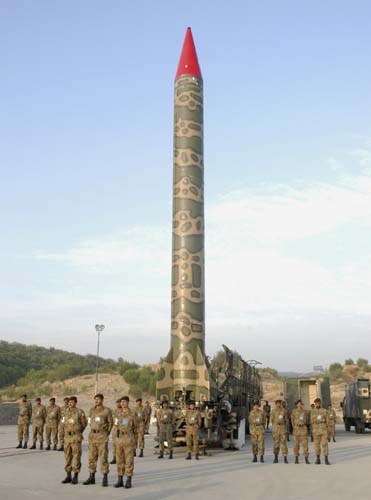 The Obama Adminstration is Helping to Upgrade Pakistan’s Nuclear Weapons


 Posts
Posts


